Mealtimes can feel overwhelming when it feels like eating is filled with rules, guilt, or uncertainty. Shopping becomes a task you avoid, knowing that you will put most of the items back on the hanger, hoping to come back when you are thinner. You go on a strict diet and exercise regimen, just to find yourself abandoning it a few weeks in. These struggles all come down to societal messaging that tells us we need to thinner to be worthy or accepted, making the individual feel like it’s a personal failure that they haven’t reached that ideal.

Photo by Tamas Pap on Unsplash
Why So Many People Feel This Way
Society often sends the message that thinner is better by celebrating weight loss, praising certain body types, and equating appearance with health, discipline, and success. From advertisements and magazine covers to conversations with friends and family, these messages can make it feel like our worth is tied to the size of our body.
Restrictive eating behaviors, like cutting out sugar or carbohydrates, skipping meals, or “earning” food through exercise, are often branded as healthy and encouraged as the path toward achieving the ideal body. Over time, these behaviors can become normalized, even when they disconnect us from our body’s natural hunger and fullness cues.

Photo by Nigel Tadyanehondo on Unsplash
Social media can amplify these messages by constantly exposing us to before-and-after transformations and influencers promoting the latest diet or wellness trend. It’s easy to compare our bodies, eating habits, and lifestyles to what we see online, even though it doesn’t reflect how our day to day lives actually look like.
Over time, we begin to trust these external messages more than our own body. Instead of asking ourselves, “What do I need right now?” we start asking, “What should my body look like?” Reconnecting with your body’s cues means you listen to what you need versus thinking about what the societally acceptable choice would be.
3 Signs Your Relationship with Food May Be Feeling Unbalanced
- Feeling disconnected from your hunger and fullness cues
You avoid eating because you just had lunch two hours ago and it doesn’t feel like what you should do. Or you find yourself picking at your plate because you can’t leave food unfinished, whatever is on your plate needs to be eaten.

Over time, these attitudes around eating can make it difficult to recognize what hunger, fullness, and satisfaction actually feel like. Instead of trusting your body’s cues, you rely on what feels acceptable or expected around mealtimes.
- Feeling like food must be earned
You tell yourself you can’t have that slice of cake because it would throw you completely off track from your meal plan filled with whole, nutritious foods. You label certain foods as “cheat foods” and find yourself feeling guilty after eating them. These behaviors shift the focus away from seeing food as fuel and nourishment for your body. Instead, food becomes something you use in pursuit of an idealized image you’ve created in your mind.
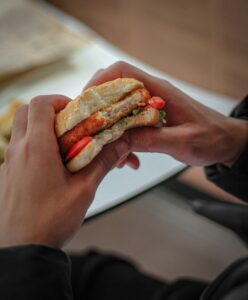
Photo by Khalid Boutchich on Unsplash
3. The restrict-overeat cycle
When you start a new diet, you may restrict foods like sweets and carbs, believing that cutting them out is the key to wellness. However, this restriction can create a scarcity mindset around these foods. When your brain receives a message that you can’t always have certain foods, you may be more likely to overeat them when you finally allow yourself to have them. It’s easy to blame yourself when this happens, but overeating in response to restriction is a natural reaction, not a lack of willpower. Part of intuitive eating is learning that it’s okay to enjoy these foods when you want them, rather than always choosing a substitute that leaves you feeling less satisfied.
What Healing Can Look Like
The first step toward healing is letting go of the negative feelings you have about food and your body, and learning to trust what your body is trying to tell you. By doing so, you can live more fully in the present, allowing food to fuel the life you want to live instead of becoming the center of it.

Photo by Khalid Boutchich on Unsplash
You Don’t Have to Figure It Out Alone
Healing your relationship with food and your body is possible. If you’re ready to approach eating with more trust, compassion, and freedom, we’d love to support you.
Making Peace with Food and your Body: An Introduction to Intuitive Eating and Reconnecting with your Body’s Inner Wisdom
Date and Time: 5-6pm on Thursdays (October 1st thru November 5th)
Location: 20 Fall Pippin Lane, Suite 202, Asheville, NC 28803
Go here to contact us about joining the group!
